

How To Repair Bumper Scratch
Flick this: you simply spent minutes perfecting your parallel parking then that you lot're just shut enough to the adjourn and take simply enough distance from the cars in front and backside you. Y'all become out, do your errands and come dorsum to your car. The cars ahead of you and backside you are gone, giving you ample room to leave the spot. Unfortunately, upon closer inspection, it seems the other cars left a little something: your bumpers take been SCRATCHED, KNICKED, DENTED. For such a pocket-sized cosmetic blemish, getting it fixed turns out to be as costly as a full on-repair of something on your automobile.
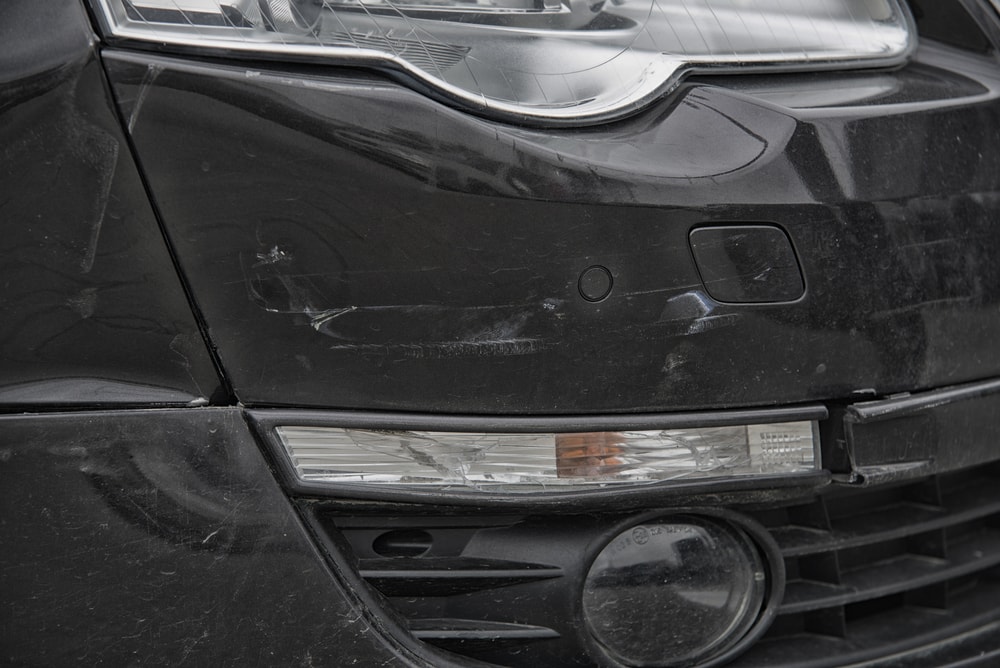
There are ways to save a lilliputian bit and a way to perform a not-and then quick-fix as a practice it yourself projection.
So yes, sprucing upwards your damaged bumpers involves a piddling endeavour in grinding, sanding, sculpting and painting. But figuring those steps out Will save you.
Want to Save THOUSANDS on Automobile Repairs? Get Endurance!
Complimentary ONLINE QUOTE
First Off: What NOT to Do
As well many vehicle owners finish up heading to their local machine parts store for some really cheap body filler and a can of what they call back is matching spray paint. This is a bad idea.
Over the years the making of car body parts has inverse and thus you, the vehicle owner volition demand to adjust. It is a whole new set of supplies you lot demand to assemble in terms of fixing painted plastic/carbon fiber parts equally opposed to the metal that used to be used to brand bumpers.
What Exercise You Demand?
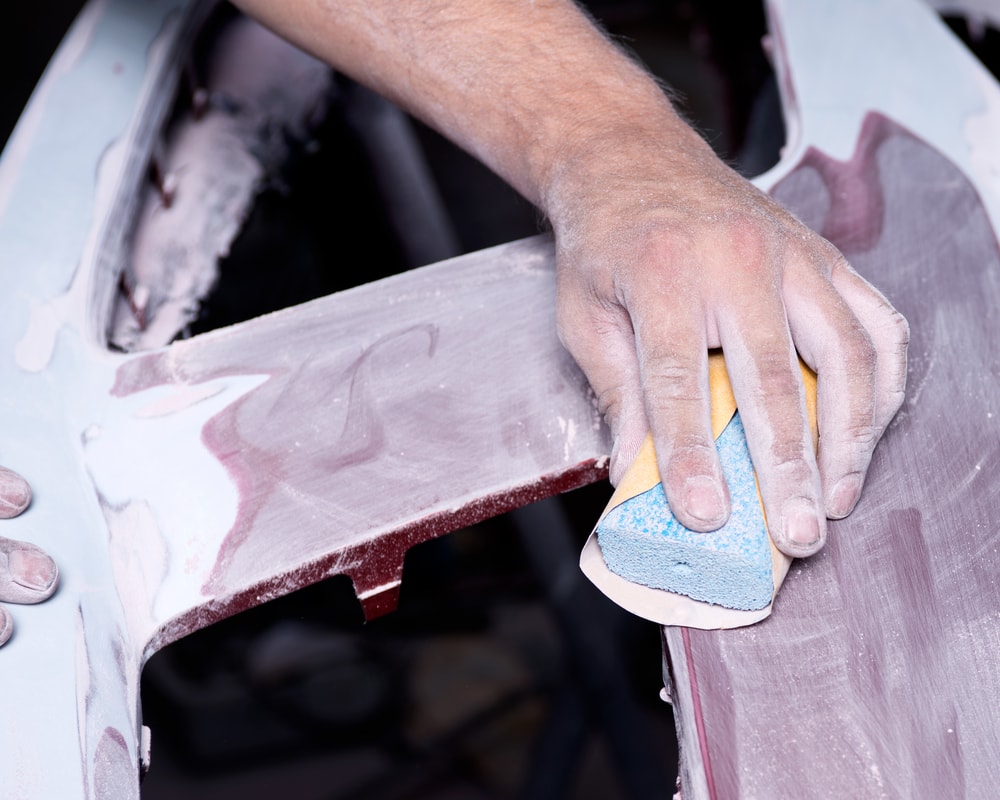
In that location are too many companies to name that specialize in DIY repair accessories for scratches and bumpers. What you lot demand is the following (at the very least):
- Repair and refinishing kits for plastic bumpers, as well every bit plastic fenders and door skins made from the canvass molding compound
- Prep solvent to remove dirt and oil and to keep things adhesive
- Mill-matched paint in a spray can
- Automotive spray primer
- Automotive spray clear coat
- Some sheets of coarse and fine sandpaper
- Scuff pad
- Cleaning towel
- Wax and grease remover
- Scratch-filling putty
Want to Save THOUSANDS on Auto Repairs? Go Endurance!
Gratis ONLINE QUOTE
Bumper Scratch Repairs
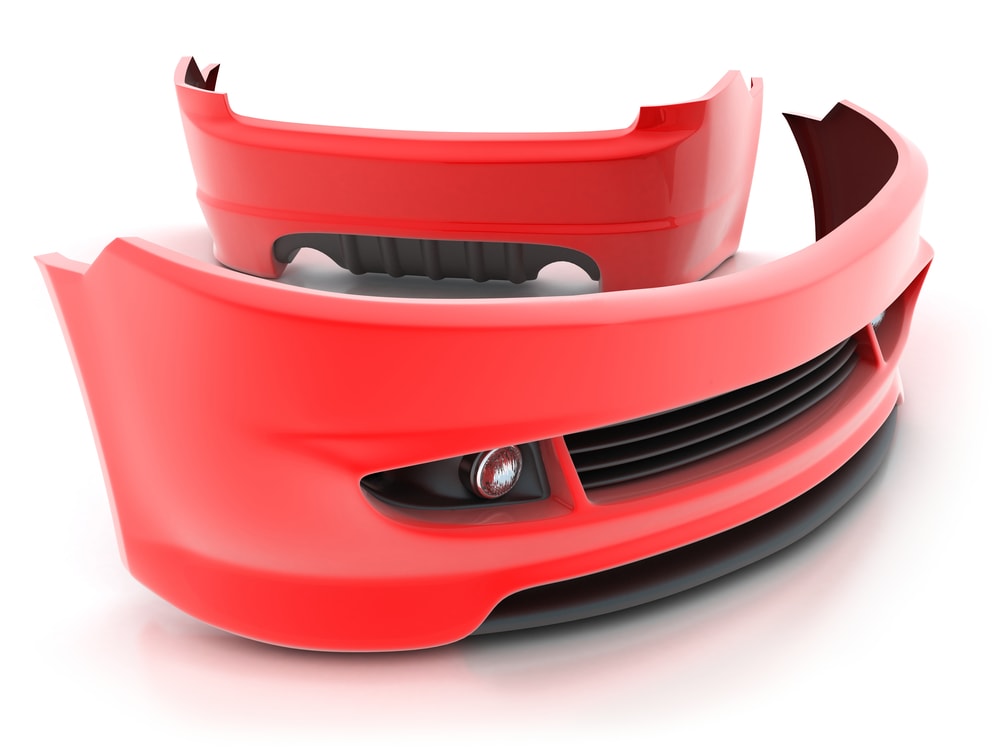
What's interesting to note is the fact that when referring to a bumper you're not actually talking about the part of the car that protects the front end and rear frame of your car. The bodily "bumper" part of a front or rear bumper is what is hidden beneath that plastic or sheet metal that is prone to nicks and scratches. The affair is that the plastic covering was in fact designed for the express purpose of deflecting and deforming upon impact.
Ok, so you need to go that panel/covering off first.
On about modern cars there are screws backside metallic caps near the trunk latch, besides as screws under the lights and at the wheel wells. After removing those One time they were removed, we were able to slide the bumper's tabs off a number of slots in the rear quarter panels. Look for screws or bolts under the trunk carpeting between the cycle and the rear bumper.
One time information technology'southward off, it is some for what Pop Mechanics refers to as the "Fascia Facelift."
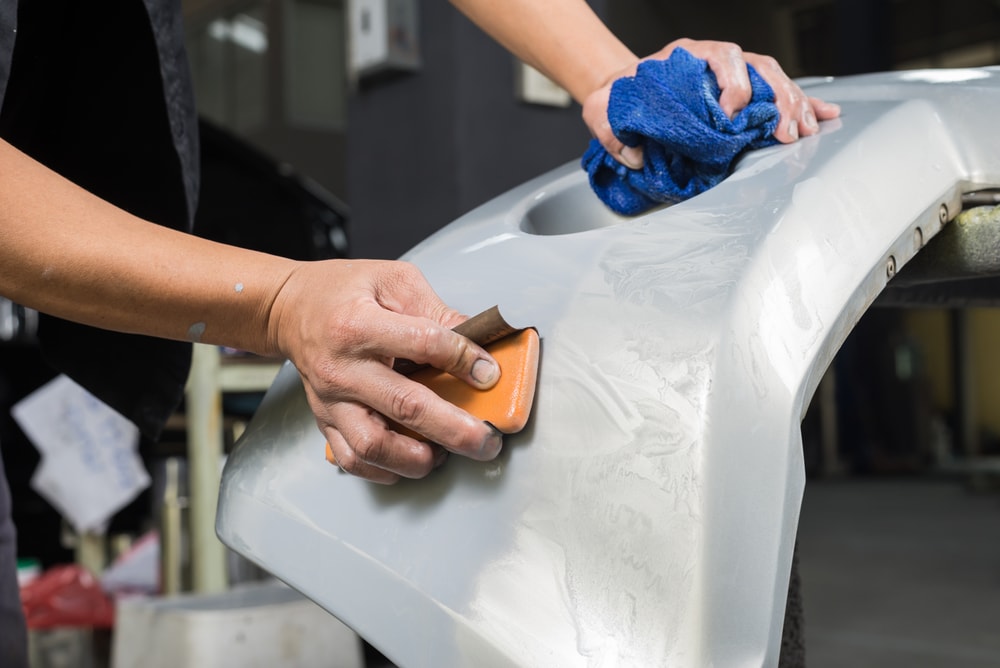
Piece of work in a warm, dry place. Go on in mind that no two bumpers are made the aforementioned way. Check the characterization inside to identify the type of plastic.
- PP (polypropylene)
- PPO (polyphenylene oxide)
- TPE (thermoplastic elastomer)
The to a higher place materials tend to smear when ground or machine sanded.
- PUR (polyurethane plastic rigid) and TPUR (thermoplastic polyurethane elastomer) react to being ground or sanded past powdering upwardly.
With that out of the mode, it is time to choose your filler. Dissimilar fillers react to dissimilar materials and most of the time they will be labeled equally such. As with near things cars: compatibility is of import.
Want to Save THOUSANDS on Auto Repairs? Go Endurance!
FREE ONLINE QUOTE
Ok with that out of the mode…
No thing what plastic your "fascia" is or what filler you use the steps remain the same:
- Slightly scuff the damaged area before cleaning it with plastic surface cleaner. Notation: if the area has been torn or pierced, you need to really scrub the surfaces within and out.
- Rinse with water and let the surface dry
- Wipe the expanse with a prep solvent. In that location's a movement you demand to call up: only 1 direction. This is to prevent dragging debris and dirt and making things worse.
- Mix equal parts of hardener and repair agglutinative on a dish or paper-thin of sorts.
- Wait for the solvent to dry. Once that happens, be certain to sand the area past mitt with fourscore-grit paper.
- Class A "V" groove in the damaged area. What This does is permit yous to align the two edges more easily while creating surface for repair cloth to stick.
- Notation: Plastic types that powder when sanded need to have the grooves with a 24-grit disc on a sander. Plastics that smear when sanded can take the groves fabricated through cordless drill and a rotary file.
- Spread the plastic filler over the repair
- Repair tears and cuts from the backside of the fascia. If the cut or tear is large, yous might take to align and then agree the edges of the repair with masking tape on the front of the fascia.
- Utilise self-stick fiberglass-repair record to add construction to the cut or tear.
- Mix the adhesive and apply information technology over the tape with a torso-filler squeegee. When the start layer of tape is in identify, utilize a 2nd layer then the threads run at a 90-caste angle to the offset layer.
Subsequently the material has hardened, expect towards the front of the fascia and remove any tape. With 80-dust sandpaper, sand off any excess material that has squeezed through. After you make full the cut or tear and any low spots in the front of the fascia with the appropriate repair material be sure to duster information technology.
When all is washed, use a calorie-free skim coat of repair material for pits and surface imperfection. This will restore the original profile before you cease sand with wet 400-dust paper.
It volition probably accept 2 coats to restore profile properly.
Want to Save THOUSANDS on Motorcar Repairs? Get Endurance!
FREE ONLINE QUOTE
Pigment Scratch Repairs
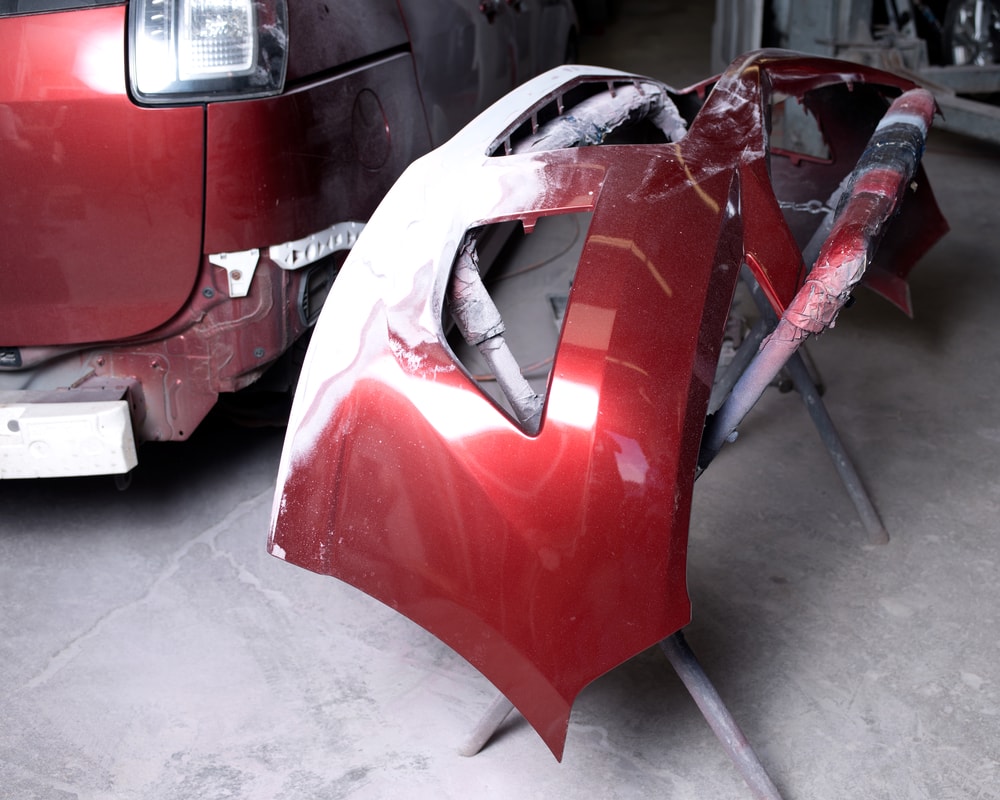
Congratulations, you've repaired your "bumper!" Give yourself a pat on the dorsum.
Now here's the hard part: painting.
- Apply 2 moisture coats of flexible part sealer
- Later drying for thirty minutes, the fascia is ready for priming and painting. Notation (read the labels and follow the maker's recommendations for operator safety).
- Prime number the fender with two coats of any two-part primer-surfacer, making sure to let the primer dry between coats.
- After the primer has hardened, dry sand the repaired areas with 400-dust newspaper to level it and remove any imperfections.
Eventually, you volition spray the bumper with a basecoat. Keep in mind that get-go, y'all have to wet sand it and so wipe the area with a tack rag in case of droppings or grit.
Desire to Salvage THOUSANDS on Machine Repairs? Get Endurance!
Gratuitous ONLINE QUOTE
At present yous tin spray the pigment according to the manufacturer's instructions. Repeat until the matter is covered completely and evenly. After the base is dry, mix the clear coat with a hardener before applying two medium clearcoats, allowing each to dry on their own.
And that's it. Y'all're done. Exit it overnight before re-installing information technology and so using a buffer to remove imperfections.

How To Repair Bumper Scratch,
Source: https://www.endurancewarranty.com/learning-center/how-to/fix-bumper-scratches/
Posted by: dosswherfuld.blogspot.com
0 Response to "How To Repair Bumper Scratch"
Post a Comment